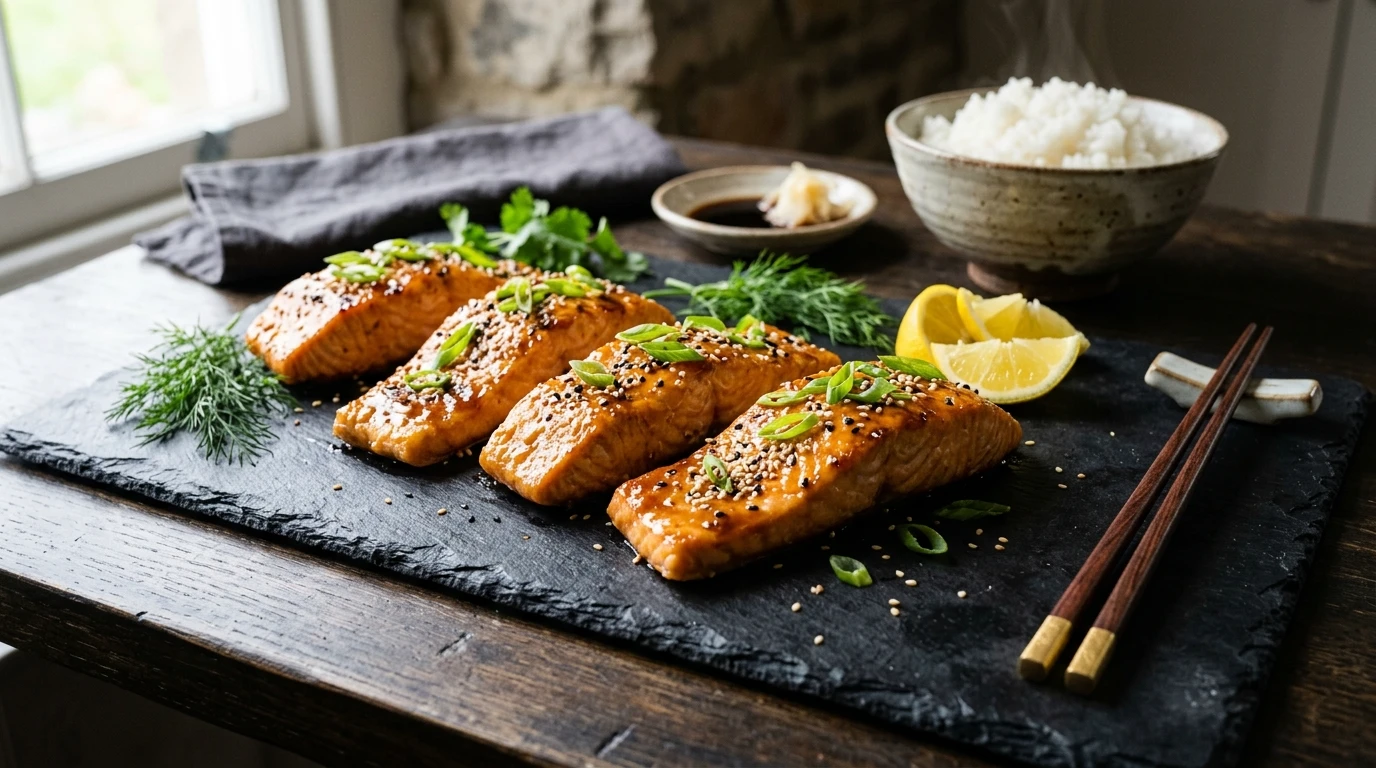
There are dinners you make, and then there are dinners that make people stop mid-bite and ask, “Wait — you made this?” Baked miso salmon is firmly in that second category. It has everything: a lacquered, caramelized glaze that catches the light, a flavor that somehow manages to be deeply savory and gently sweet at the same time, and a texture so silky it practically dissolves on your tongue.
The best part? You need five ingredients and fifteen minutes in the oven. That’s it. No complicated techniques, no hard-to-find equipment, and no culinary degree required. The miso paste does the heavy lifting — it coats the salmon in a umami-rich marinade that cures the surface slightly, so when it hits the heat, it caramelizes into something genuinely extraordinary. I’ve made this for casual Tuesday dinners and for guests I was trying to seriously impress, and the response has been identical every single time: complete silence, then requests for the recipe. This is the one.
Why You’ll Love This Recipe
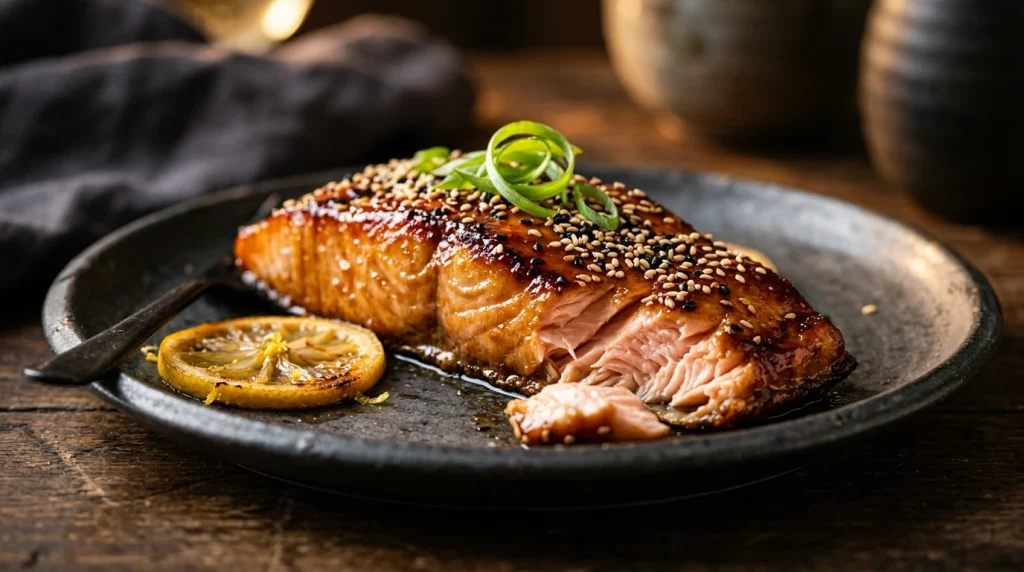
This baked miso salmon hits a flavor note that very few weeknight meals ever reach. The glaze is rich, glossy, and deeply savory — almost buttery — with a warmth from the miso that layers beautifully against the natural fat of the salmon. The aroma alone, as it caramelizes in the oven, will fill your kitchen with something that smells far more impressive than the effort involved.
The texture is the real showstopper: fork-tender, flaky, and moist all the way through. It works for date nights, family dinners, or ambitious meal-prep. And because it comes together in under 30 minutes, it’s easily the best salmon recipe for anyone who wants restaurant results without the restaurant bill.
Speaking of weeknight wins that taste like takeout, our healthy chicken pad thai delivers that same impressive flavor in the same quick timeframe.
Ingredients
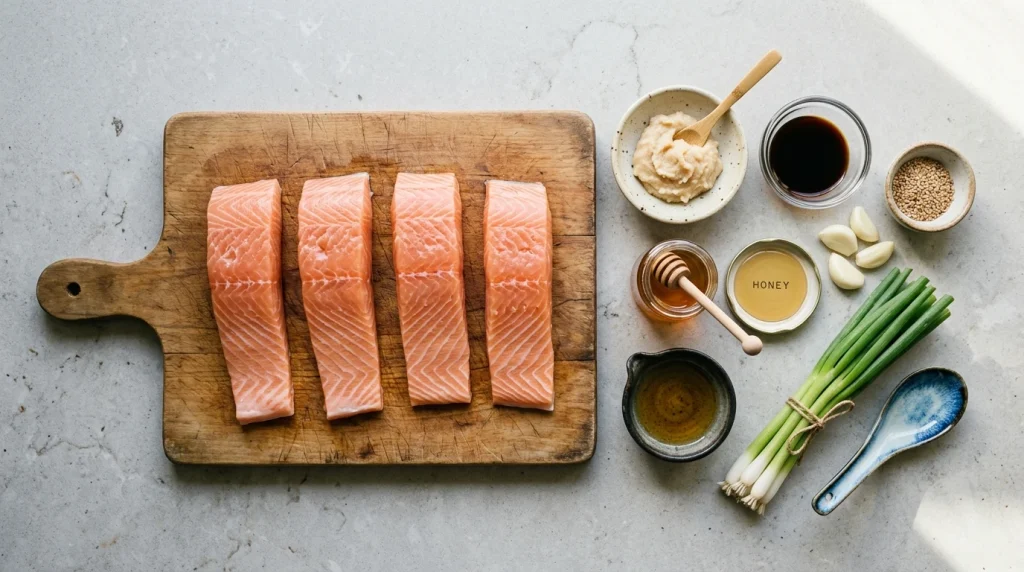
- 4 salmon fillets (about 170–200g / 6–7 oz each), skin-on or skinless
- 3 tbsp white miso paste (shiro miso — milder and sweeter than red miso)
- 2 tbsp low-sodium soy sauce
- 1 tbsp honey (or maple syrup for a slightly earthier sweetness)
- 1 tbsp sesame oil
- 3 garlic cloves, finely minced
- 1 tsp fresh ginger, grated (optional but highly recommended)
- 1 tbsp toasted sesame seeds (for garnish)
- 2 scallions, thinly sliced (for garnish)
- 1 lemon, cut into wedges (to serve)
How to Make It
Make the miso glaze
In a small bowl, whisk together the white miso paste, soy sauce, honey, sesame oil, minced garlic, and grated ginger until completely smooth. The mixture should look glossy and smell extraordinary — deeply savory with a hint of sweetness. This is your glaze, your marinade, and the entire soul of this dish in one little bowl.
Coat the salmon
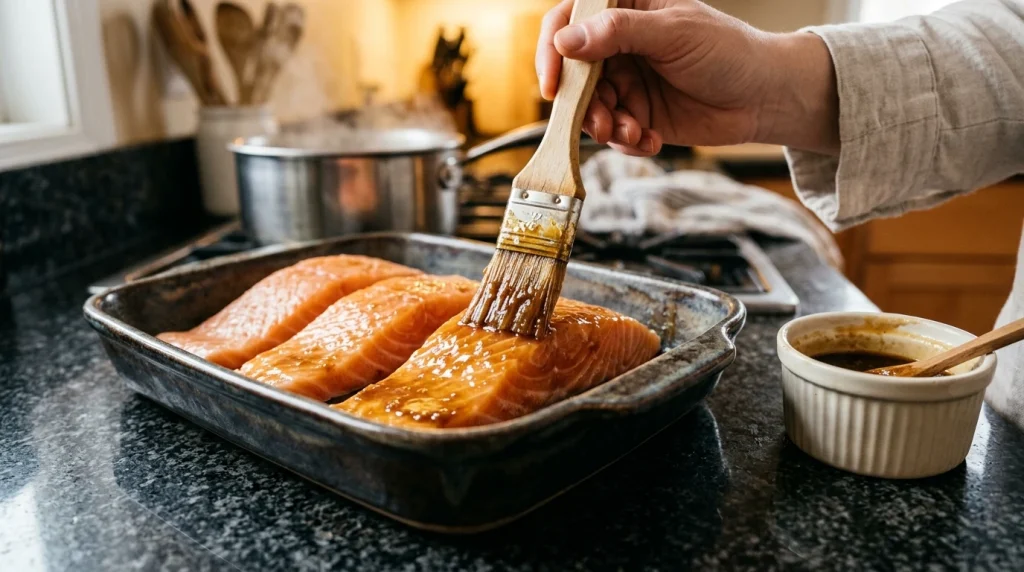
Pat your salmon fillets dry with paper towels first — this is a step most people skip, but moisture on the surface of the fish prevents the glaze from adhering properly and stops that beautiful caramelization from forming. Once dry, place the fillets in a shallow ceramic dish or on a lined baking tray and spoon the miso glaze generously over each one, spreading it into an even layer with a brush or the back of a spoon.
Marinate if you have time
Cover the dish and refrigerate for at least 30 minutes — or up to 4 hours for deeper flavor. I’ve noticed that even 30 minutes makes a significant difference compared to cooking it immediately. If you’re short on time, you can go straight to baking, but the marination step is where the magic quietly builds.
Preheat your oven
Set it to 200°C (400°F) and let it come to full temperature before the salmon goes in. A properly preheated oven is what creates that caramelized, slightly sticky glaze rather than a pale, steamed surface. Place your oven rack in the upper-middle position.
Bake the salmon
Line a baking tray with foil or parchment paper and arrange the salmon fillets with space between them. Bake for 12 to 15 minutes depending on thickness. The salmon is done when it flakes easily with a fork and the glaze has turned deep golden with slightly darkened edges. If you want extra caramelization — and you do — switch the oven to broil for the final 2 minutes. Watch it closely; it goes from perfect to overdone very quickly under the broiler.
Check for doneness
The internal temperature should read 52–55°C (125–130°F) for medium — still slightly translucent in the very center, moist and silky. For fully cooked salmon, aim for 60°C (140°F). In my experience, pulling it at medium gives you the most luxurious texture, especially with a rich glaze like this one.
Rest and garnish
Remove the salmon from the oven and let it rest on the tray for 2 to 3 minutes before plating. Scatter toasted sesame seeds and sliced scallions over each fillet generously. The contrast of the green scallion against the deep amber glaze is part of what makes this dish look as good as it tastes.
Serve immediately
Plate on warmed dishes alongside your chosen sides and a wedge of lemon for each person. That squeeze of fresh lemon at the table cuts through the richness of the miso glaze and lifts every single flavor on the plate. Don’t leave it out.
Cooking Tips & Variations
I’ve found that white miso (shiro miso) is the best choice for this recipe — it’s sweeter and more delicate than red miso, which can overpower the salmon. If you only have red miso, use half the quantity.
Common mistakes to avoid: Don’t skip drying the salmon, don’t crowd the fillets on the tray, and never open the oven door repeatedly — it drops the temperature and stalls the caramelization.
Variations to explore:
- Garlic butter salmon twist: Add 1 tbsp of softened butter to the glaze for an even richer, more indulgent finish that melts into the flakes beautifully.
- Spicy miso version: Stir in 1 tsp of sriracha or sambal oelek for gentle heat that plays off the sweetness of the honey perfectly.
- Sheet pan dinner: Add broccoli florets or bok choy tossed in sesame oil to the same tray — they roast in the same 15 minutes and absorb the drippings from the glaze.
- Make-ahead: Mix the glaze up to 3 days ahead and store it in a sealed jar in the fridge — it gets even better as it sits.
Serving & Storage Tips
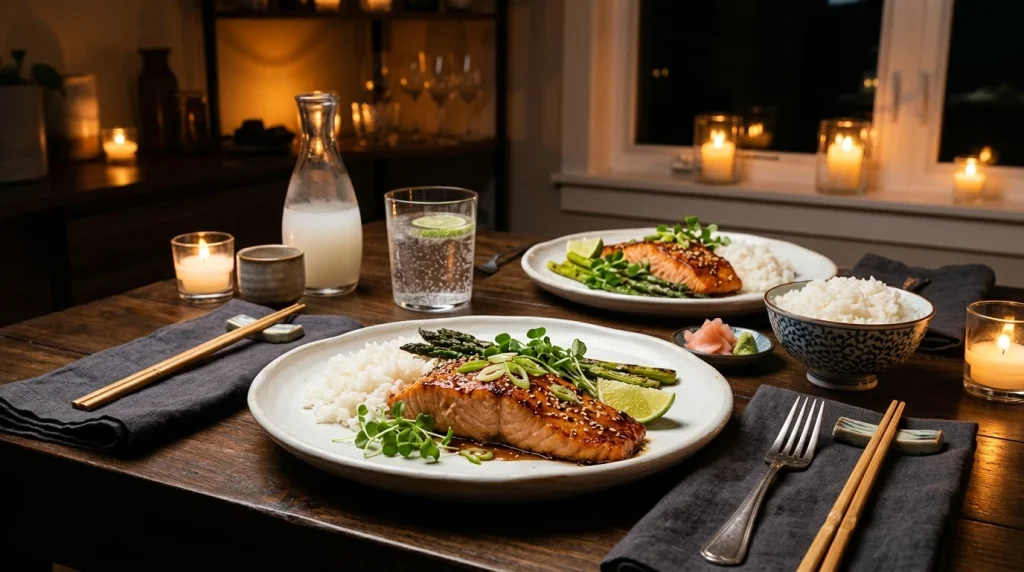
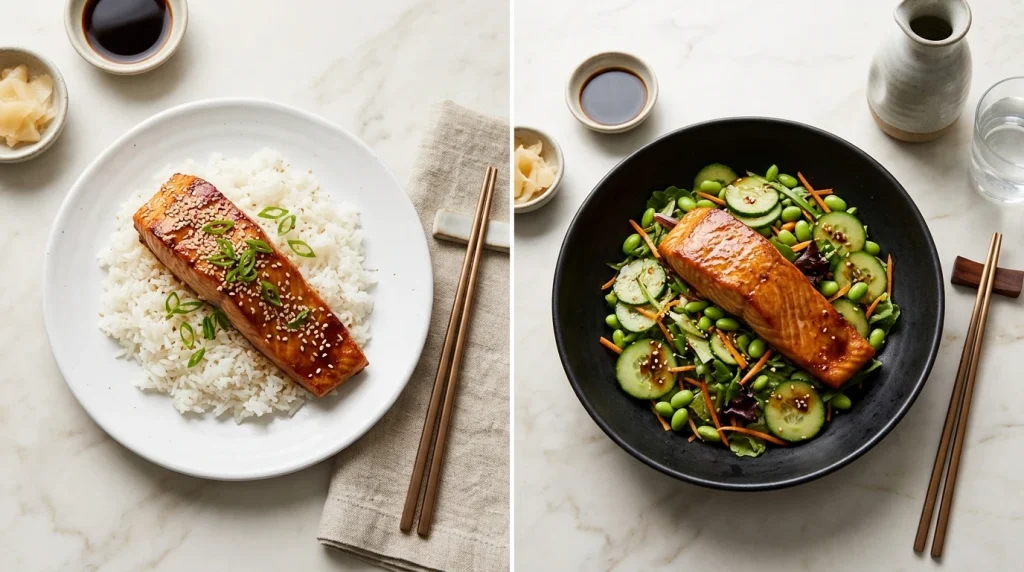
Baked miso salmon is best served immediately, while the glaze is still sticky and the fish is at peak flakiness. Serve it over steamed jasmine rice or soba noodles to soak up every drop of the glaze. For a lighter spread, pair it with a crisp cucumber salad, edamame, and miso soup for a full Japanese-inspired meal. A glass of chilled sake or dry white wine makes a quietly perfect pairing.
Storage: Refrigerate leftover salmon in an airtight container for up to 2 days. The flavor actually deepens overnight, making it ideal for next-day lunch bowls.
Reheating: Warm gently in a covered skillet over low heat with a few drops of water to create steam, or enjoy it cold — flaked over rice with a drizzle of soy sauce and sesame oil, it makes an outstanding next-day meal that requires zero effort.
Conclusion
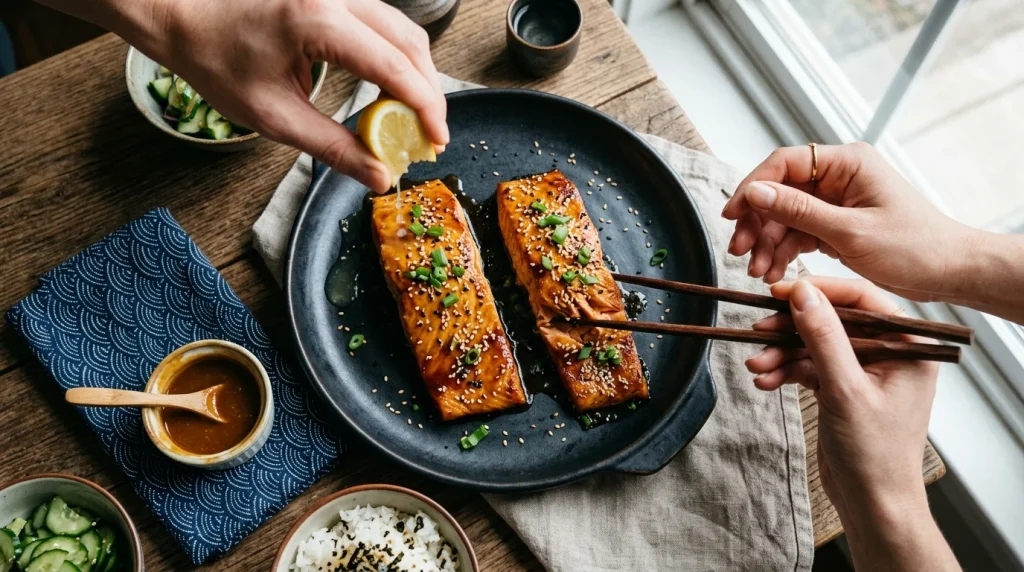
This baked miso salmon is proof that the most impressive meals aren’t always the most complicated ones. A handful of pantry ingredients, fifteen minutes of oven time, and you have something that looks and tastes like it came from a restaurant kitchen. It’s the kind of recipe that becomes a household staple — the one you turn to when you want to eat well without the effort. share it with anyone who claims they can’t cook fish, and make it this week. Once that glaze caramelizes and the kitchen fills with that incredible aroma, you’ll understand exactly why this recipe is the best salmon recipe you’ll keep coming back to.