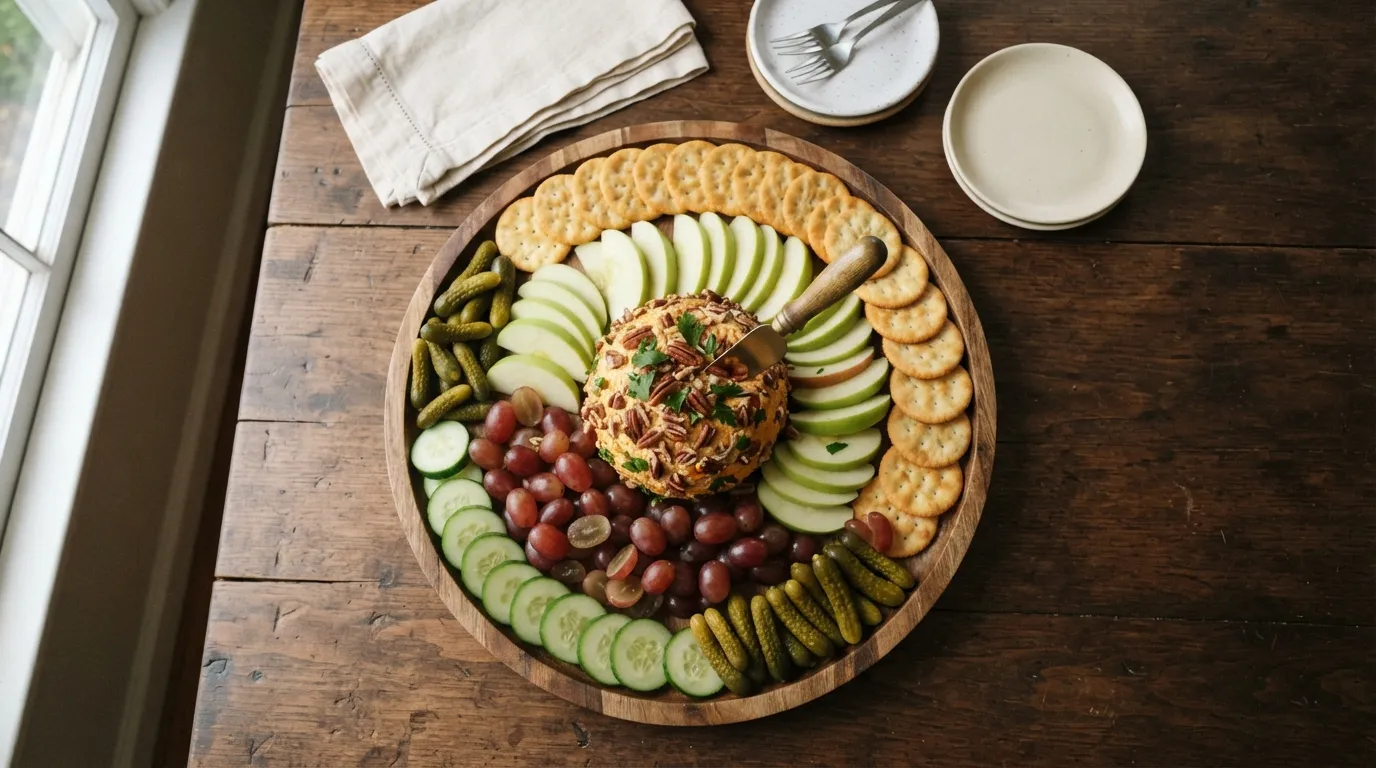
Cream cheese only sets firm after about 2 hours in the fridge, and that single fact decides whether a cheese ball holds its shape on a platter or slumps into a puddle. Get the chill right and the rest of these cheese ball platter ideas are about layout: what goes around the ball, how much of it, and where.
This guide covers one base recipe that feeds 12 to 16, three coatings, the cracker and fruit amounts per guest, and a five-step way to lay out the board.
Start With the Right Board Size
The board should be about twice the width of the cheese ball plus room for two rings of food around it. A 2-pound ball, which serves 12 to 16 as part of a spread, needs a round board about 16 inches wide or a rectangle about 12 by 18 inches.
Too small and everything piles up and slides off. Too big and the food looks sparse unless there is a lot of it. If the board is a little large, fill the gaps with a second, smaller bowl of nuts or olives, and keep the crackers in full lines.
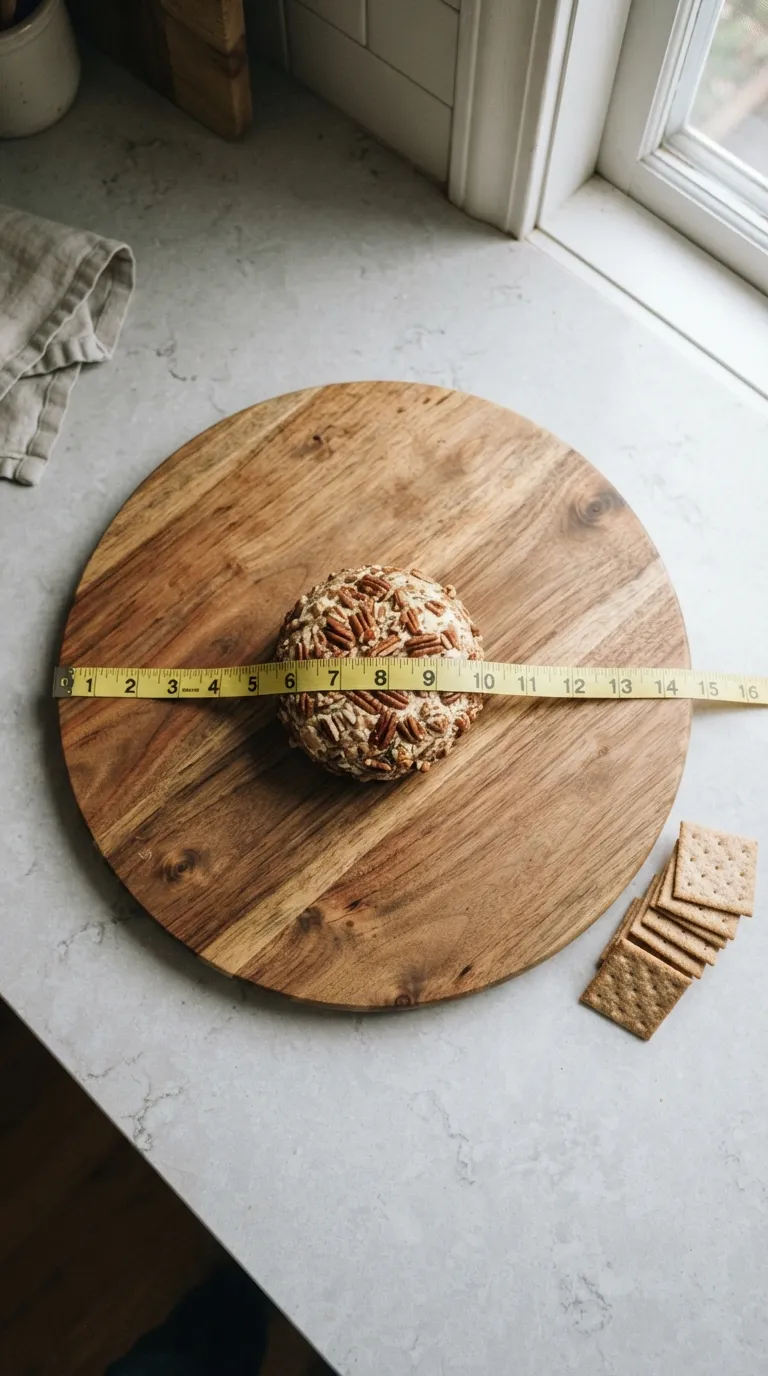
Make the Base Cheese Ball
This base takes 15 minutes of mixing and needs at least 2 hours in the fridge before shaping. Softened cream cheese blends smoothly; cold cream cheese leaves lumps that show through the coating.
- Let 16 oz (450 g) cream cheese sit at room temperature for 1 hour until soft.
- Beat it with 2 cups (200 g) finely shredded sharp cheddar, 2 sliced green onions, 1 teaspoon garlic powder, 1/2 teaspoon onion powder, 1 teaspoon smoked paprika and 1/4 teaspoon salt until smooth, about 2 minutes.
- Scrape the mix onto a large sheet of plastic wrap, gather the wrap up around it and twist into a rough ball.
- Chill for at least 2 hours, or up to 2 days.
- Unwrap, roll between your palms to smooth the shape, then press the coating all over it.
Shred the cheddar yourself on the fine side of the grater. Bagged shreds are coated in starch and make the ball look grainy.
Choose One of Three Coatings
The coating does most of the visual work, so pick it for the colour you want on the board. Each amount below covers one 2-pound ball.
- Pecan and parsley: 1 cup toasted pecans, finely chopped, mixed with 1/4 cup chopped parsley. A brown and green finish that suits a wooden board.
- Everything bagel: 1/3 cup everything bagel seasoning. A speckled black and white look that stands out on slate.
- Cranberry and pistachio: 1/2 cup chopped dried cranberries and 1/2 cup chopped pistachios. Red and green, so it fits a Christmas table.
Press the coating on with flat hands. Rolling the ball through it drags the soft cheese and leaves bald patches. Coat it no more than 4 hours before serving so nuts stay crunchy.
Plan Crackers and Dippers by Guest Count
People eat more crackers than expected because each scoop of cheese needs one. Plan on 6 to 8 crackers per guest when the platter is one of several dishes, and 10 or more when it is the main snack.
| Guests | Cheese ball | Crackers | Fruit and vegetables |
|---|---|---|---|
| 8 | 1 small (1 lb) | 1 box (about 60) | 3 cups |
| 16 | 1 large (2 lb) | 2 boxes (about 120) | 6 cups |
| 24 | 2 large (4 lb) | 3 boxes (about 180) | 9 cups |
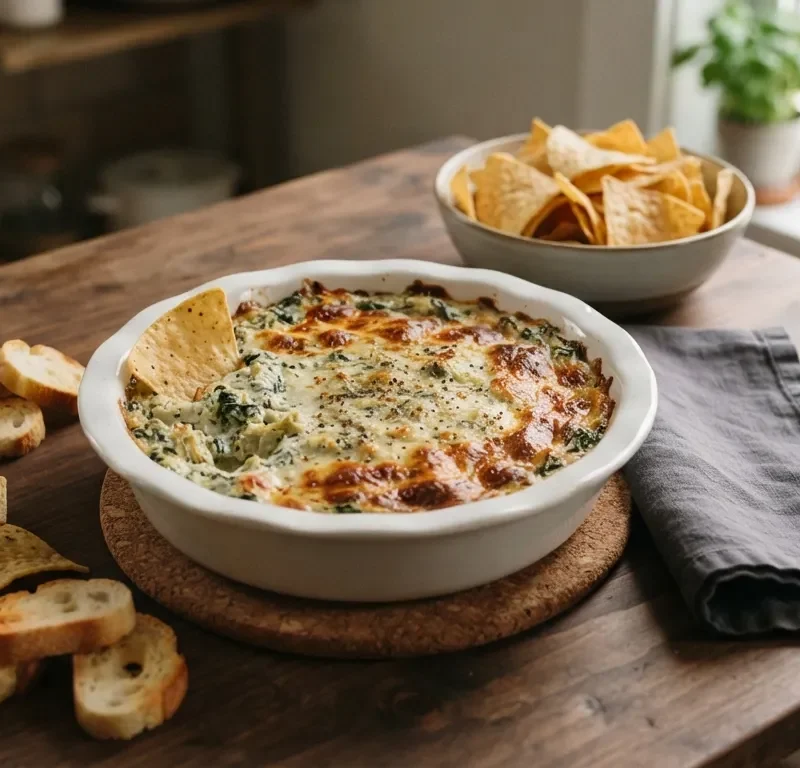
Mix shapes and colours: a plain water cracker, a seeded or whole grain cracker and something sturdy like pretzel crisps or toasted baguette slices. Sturdy dippers break less when the cheese is cold. A warm dip on the same table, like one of these hot party dips, takes pressure off the crackers.
Add Fruit, Vegetables and Something Pickled
The fruit and vegetables on the board do two jobs: they add colour, and they give guests something to eat between rich bites of cheese. Choose two fruits, two vegetables and one pickled item.
- Fruit: red and green grapes in small bunches, sliced apples tossed in lemon juice so they stay pale, pear slices and dried apricots.
- Vegetables: cucumber rounds, sweet mini pepper halves, celery sticks and cherry tomatoes.
- Pickled: cornichons, sweet pickle chips, pickled red onions or green olives.
Cut fruit and vegetables into one-bite pieces so nobody needs a knife. Pat everything dry before it goes on the board, because water near the crackers makes them soft within 30 minutes.
Lay Out the Platter in Five Moves
The order matters more than the ingredients. Build from the centre out, and add the most fragile things last.
- Set the cheese ball slightly off centre, with a short knife or spreader beside it.
- Place one small bowl of pickles or olives on the opposite side to balance the ball.
- Fan the crackers in two or three curved lines out from the ball, like spokes.
- Fill the big gaps between the cracker lines with grape bunches and sliced fruit.
- Tuck vegetables and small items like nuts into the last empty spaces, then add a few herb sprigs.
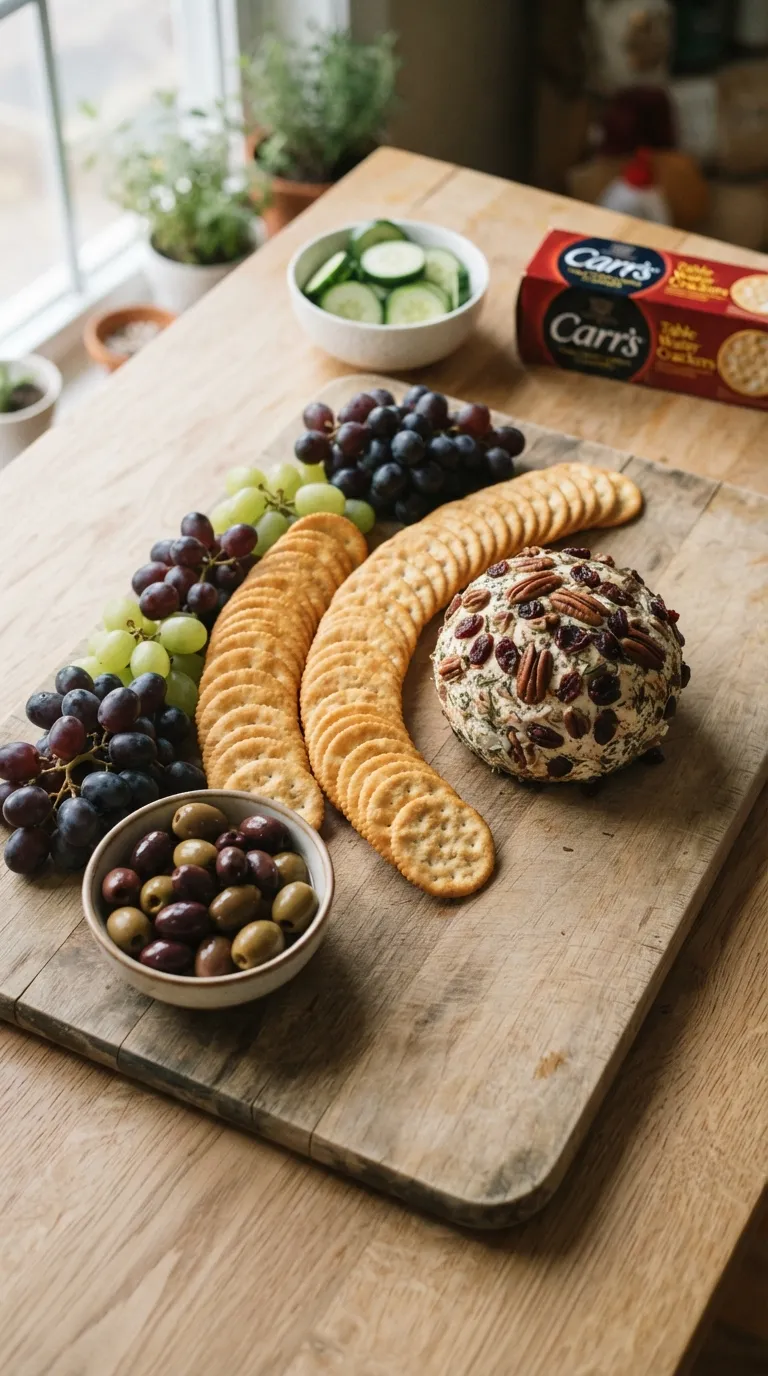
Build the board no more than an hour before guests arrive, and keep it covered loosely with a clean towel until then.
Why This Layout Works
- Off centre looks planned. A ball dead in the middle reads as stiff, and the eye moves around a board more easily when the main thing sits slightly to one side.
- Curved cracker lines lead hands toward the cheese, so guests spread the cheese and do not break the ball by stabbing at it.
- Food in odd-numbered groups of three or five looks fuller than even rows.
- Colour alternates: pale crackers next to red grapes next to green cucumber, so no two similar colours touch.
- Every gap is filled, so the board looks generous even with modest amounts on it.
Common Mistakes and Quick Fixes
Most platter problems come from timing, not ingredients. A ball shaped straight after mixing is too soft and slumps within an hour. Chill it the full 2 hours, and if it softens on the table, slide the board into the fridge for 15 minutes between rounds.
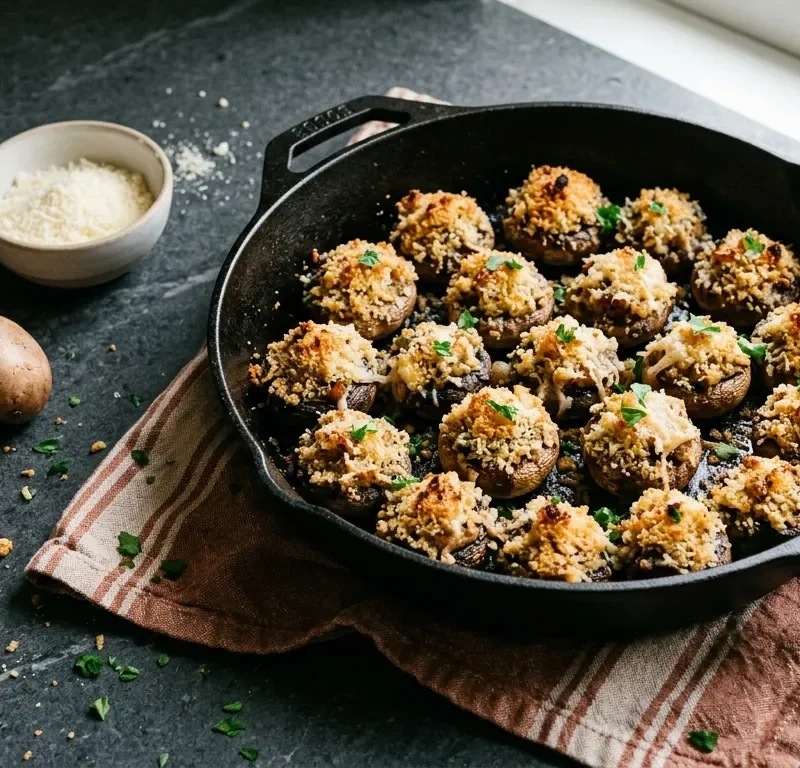
Crackers laid touching wet fruit go soft, so leave a small gap or a row of nuts between them. Sliced apples turn brown in 20 minutes unless they are tossed in lemon juice. And a board crowded with too many cheeses competes with the ball; one cheese ball and one wedge of a different cheese is plenty. For a hot bite on the same table, these stuffed mushrooms bake in 20 minutes.
Shape It for the Holidays
The base mix is soft enough to shape into simple holiday forms once it has chilled for 2 hours.
- Snowman: divide the mix into one large and one small ball, roll both in shredded white cheddar, and stack them with a pretzel stick through the centre.
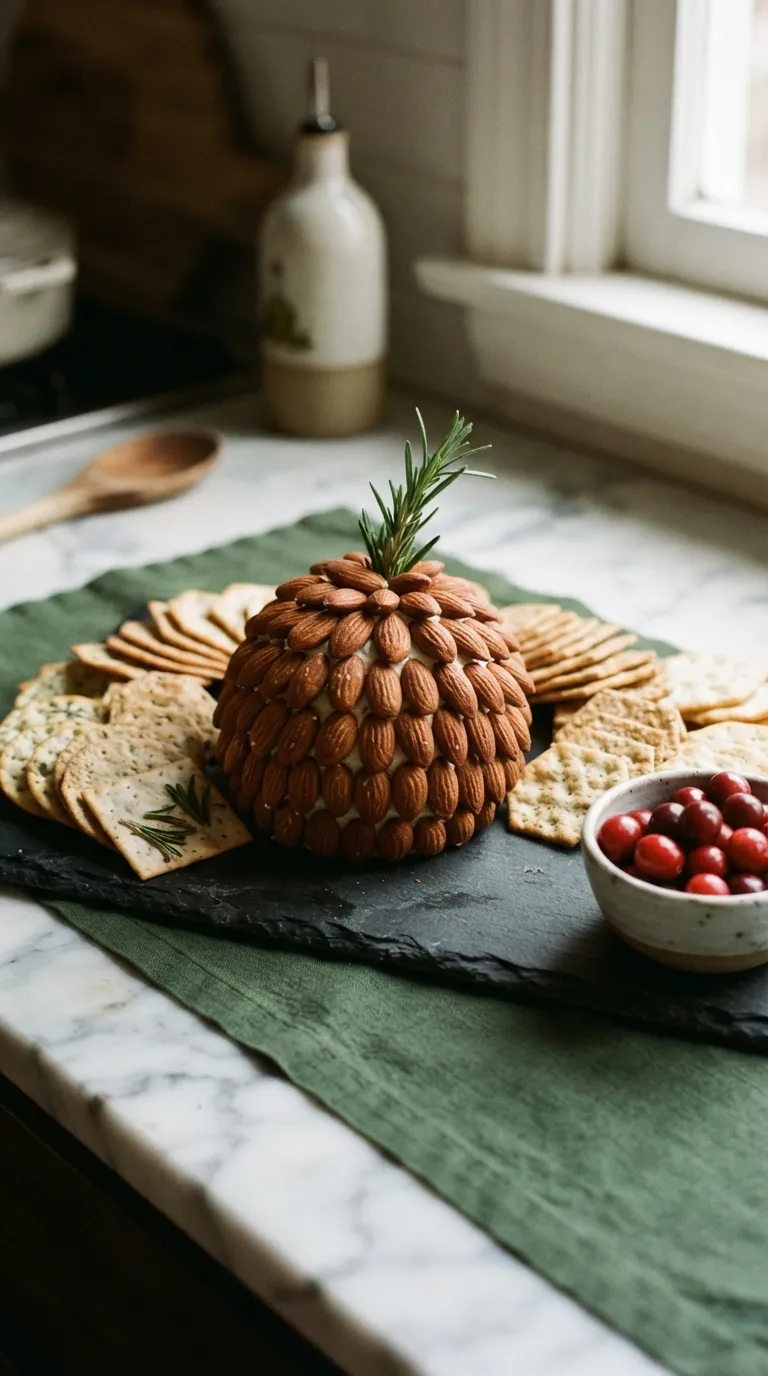
- Pine cone: shape an oval and press whole almonds into it in overlapping rows, points facing out.
- Wreath: shape the mix into a ring on the board, cover it in chopped parsley and dot with pomegranate seeds.
Season note: For Eid or a spring gathering, roll the ball in chopped pistachios and dried rose petals, and swap the apples for ripe figs and apricots.
Before You Cook
Why does a cheese ball fall apart during coating?
The mix is too soft, usually because it went straight from mixing to shaping. Cream cheese needs at least 2 hours cold to firm up. Chill it wrapped in plastic, then roll it smooth with damp hands and press the coating on with flat hands.
Why does the coating fall off on the platter?
The surface of the ball dried out in the fridge, so the nuts have nothing to stick to. Leave it wrapped until coating, and if the outside looks dry, roll it in your palms for 30 seconds to warm the surface before pressing the coating on.
Why do the crackers go soft within an hour?
Moisture from cut fruit, pickles and the air soaks into them. Pat fruit and vegetables dry, keep pickles in a small bowl, leave a little space between crackers and wet foods, and refill crackers from the box halfway through the party instead of putting them all out at once.
Make-Ahead Tips
The cheese ball mix keeps 3 days wrapped in plastic in the fridge, so it can be made on a weekday for a weekend party. Coat it the day of serving. Wash grapes and slice vegetables the night before and store them in towel-lined boxes; slice apples last and toss them in lemon juice. Leftover cheese ball, scraped of its coating, freezes for 1 month and works as a spread on sandwiches.
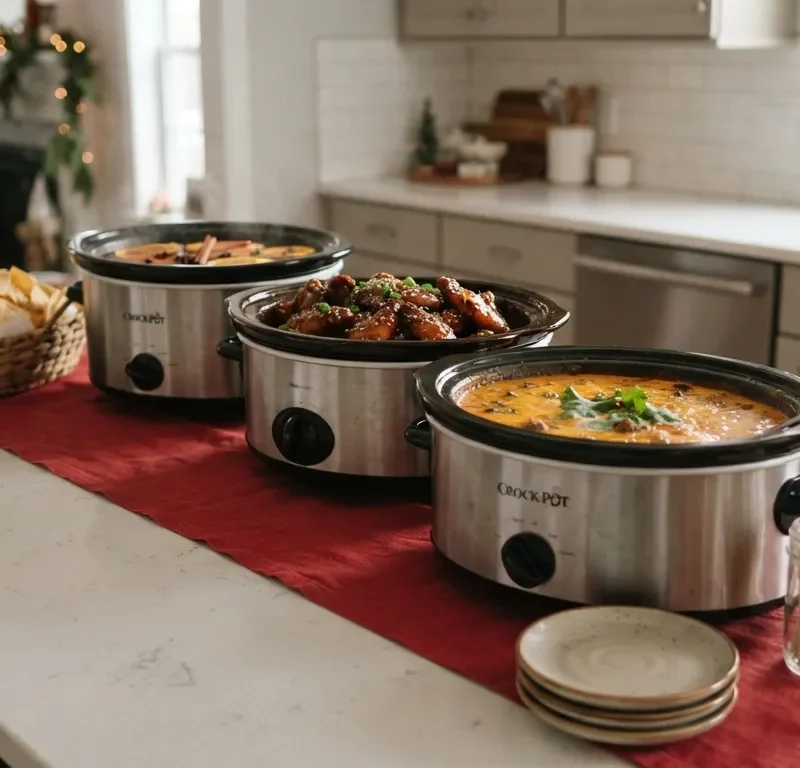
Lay the board out 1 hour before guests arrive and keep it cold until the doorbell rings. Pair it with a slow cooker or two from these crockpot holiday party foods so the warm food holds itself while the board does the rest.