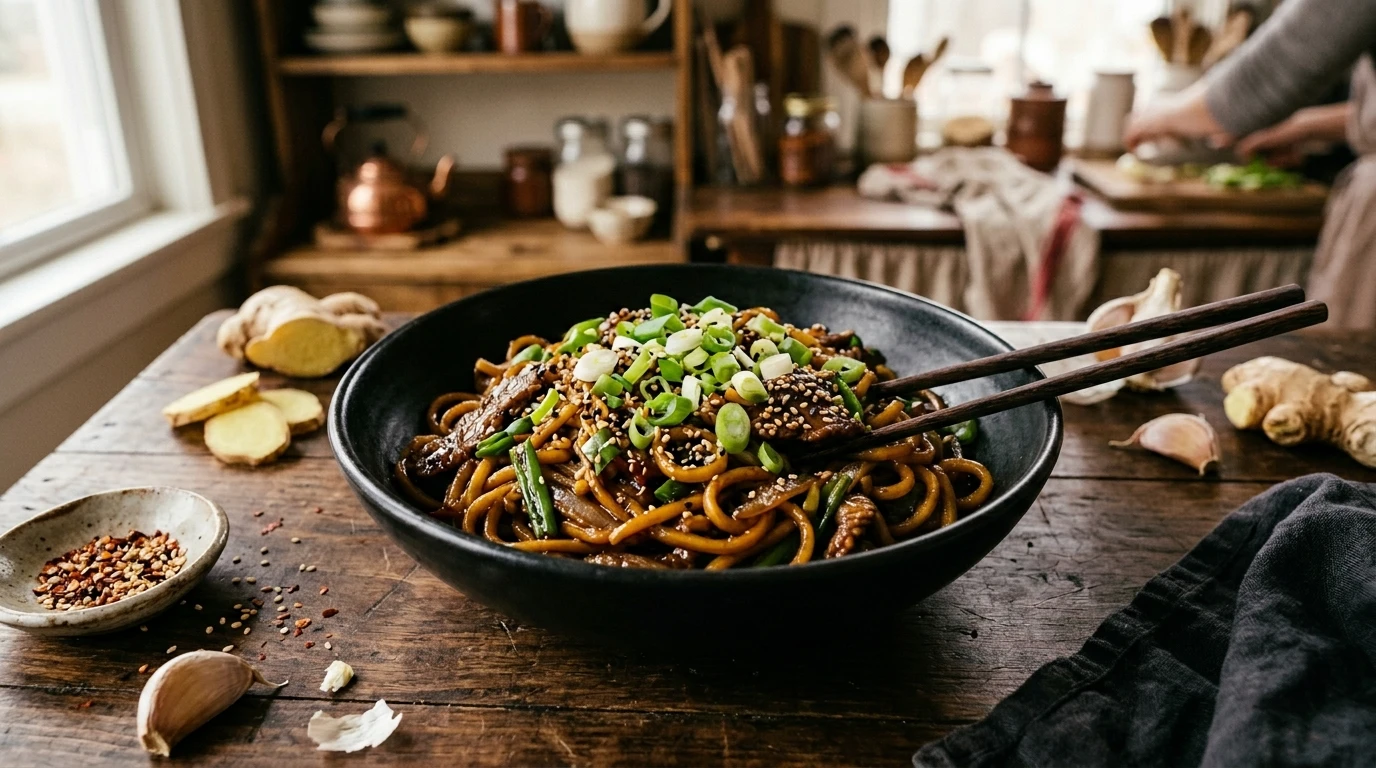
What if the most craveable noodle dish you’ve ever tasted was hiding in your own pantry all along? These Mongolian noodles are exactly that — deeply savory, glossy with sauce, and built almost entirely from ingredients you already have on hand. No special trip to the Asian grocery store, no obscure pastes or hard-to-find powders. Just bold, satisfying flavor that comes together in one pan in under 45 minutes.
The sauce is the star here: sweet, salty, and faintly smoky, it clings to every strand of noodle in the most irresistible way. Inspired by the rich umami flavors of Chinese-American cooking, this recipe is the kind of weeknight dinner that feels indulgent without the effort. Whether you’re feeding a hungry family or just cooking for yourself after a long day, Mongolian noodles deliver every single time.
Why You’ll Love This Recipe
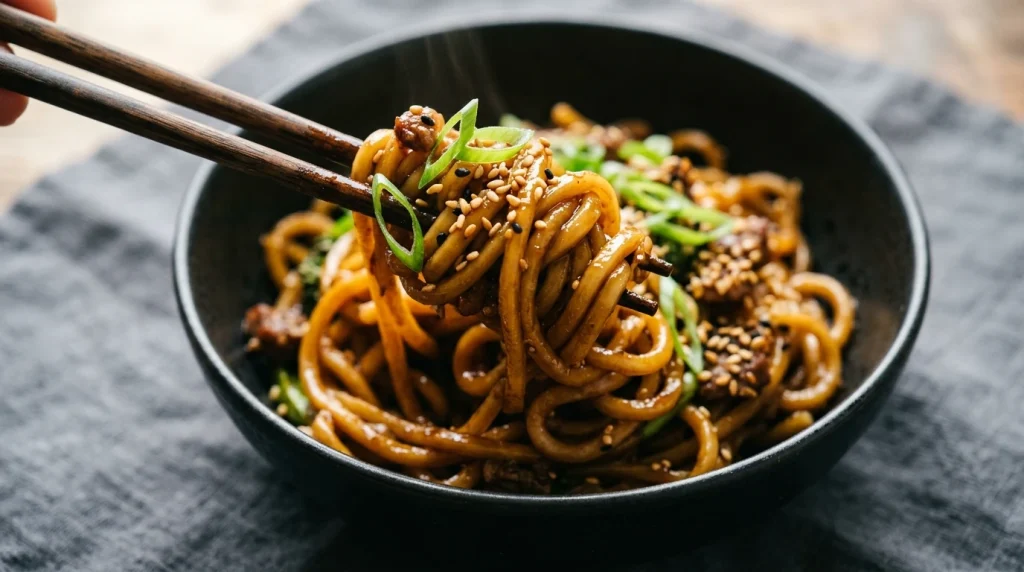
Close your eyes and imagine this: silky noodles drenched in a sauce that’s equal parts caramel-sweet and deeply savory, with a gentle heat that builds slowly at the back of your throat. The garlic and ginger bloom in the pan and fill your kitchen with the kind of aroma that pulls everyone off the couch. In my experience, this dish wins over even the most reluctant home cooks — because the sauce does all the work. It’s comforting like your favorite takeout, yet completely homemade. Families love it, meal-preppers rely on it, and first-time cooks feel like kitchen heroes making it.
Ingredients
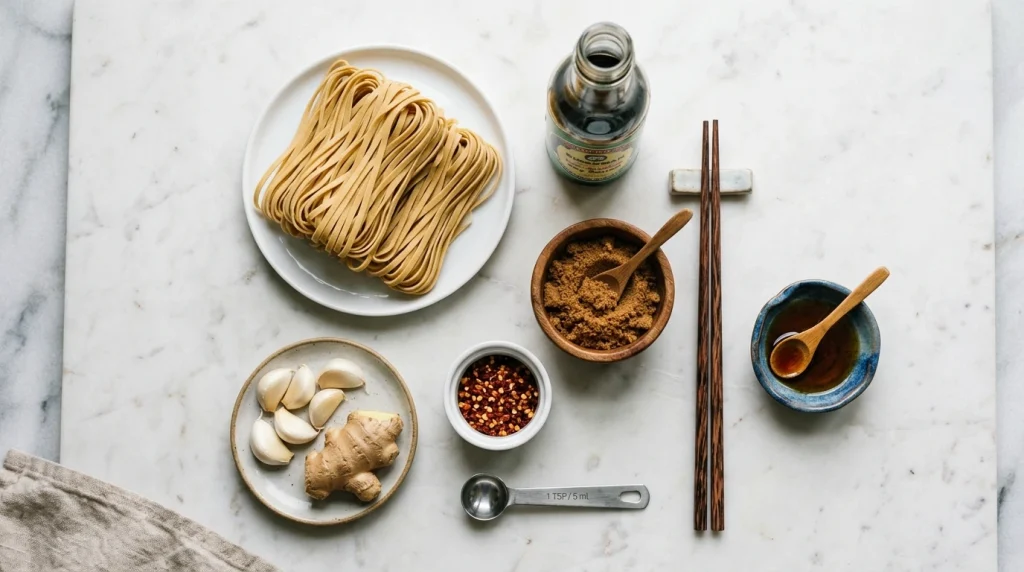
For the Noodles:
- 200g (7 oz) lo mein noodles, spaghetti, or linguine
- 1 tbsp sesame oil (for tossing cooked noodles)
- 3 cloves garlic, minced
- 1 tsp fresh ginger, grated
For the Mongolian Sauce:
- ⅓ cup low-sodium soy sauce
- 3 tbsp brown sugar (packed)
- 1 tbsp sesame oil
- ½ tsp red chili flakes (adjust to taste)
- 2 tbsp water
To Finish:
- 3 stalks green onions, sliced diagonally
- 1 tsp toasted sesame seeds
- 1 tbsp neutral oil (vegetable or avocado) for cooking
How to Make It
Step 1: Cook the Noodles
Bring a large pot of salted water to a boil and cook your noodles according to package directions — usually 7–9 minutes for lo mein or spaghetti. You want them al dente (with a slight bite), not soft. Drain well, toss immediately with 1 tbsp sesame oil to prevent sticking, and set aside.
Step 2: Mix the Sauce
While the noodles cook, whisk together the soy sauce, brown sugar, sesame oil, red chili flakes, and water in a small bowl until the sugar fully dissolves. Taste it — it should be bold and slightly sweet. This is your moment to adjust: a touch more sugar if you want it sweeter, a splash more soy if you want deeper saltiness.
Step 3: Heat the Pan
Place a wok or large skillet over medium-high heat. Add the neutral oil and let it heat until it shimmers — you’ll know it’s ready when a drop of water flicked in sizzles immediately.
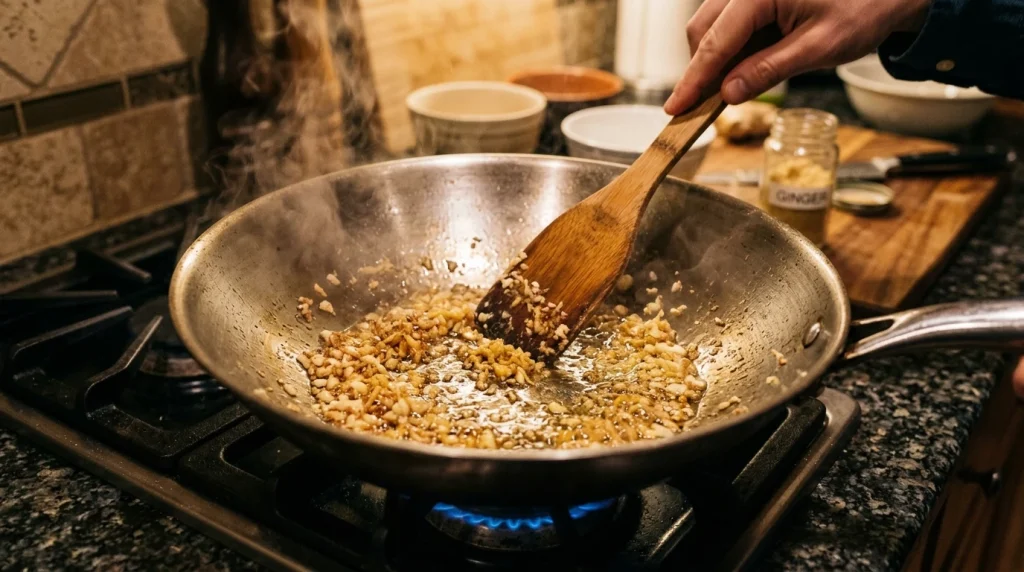
Step 4: Saute the Aromatics
Add the minced garlic and grated ginger to the hot pan. Stir constantly for 30–45 seconds until golden and deeply fragrant. Don’t walk away here — garlic goes from golden to burnt very quickly, and burnt garlic will make the whole dish bitter.
Step 5: Add the Sauce
Pour the prepared sauce into the pan with the garlic and ginger. Let it bubble and simmer for 1–2 minutes, stirring gently. You’ll see it thicken slightly and turn glossy — that’s exactly what you want.
Step 6: Toss the Noodles
Add the drained, sesame-tossed noodles straight into the pan. Use tongs or two forks to toss everything together, making sure every strand gets coated in that gorgeous sauce. Keep the heat on medium for 1–2 more minutes so the noodles absorb the flavors fully.
Step 7: Finish and Plate
Remove from heat. Scatter sliced green onions over the top and sprinkle with toasted sesame seeds. Serve immediately straight from the pan into bowls — these noodles are best hot, when the sauce is at its most glossy and fragrant.
Cooking Tips & Variations
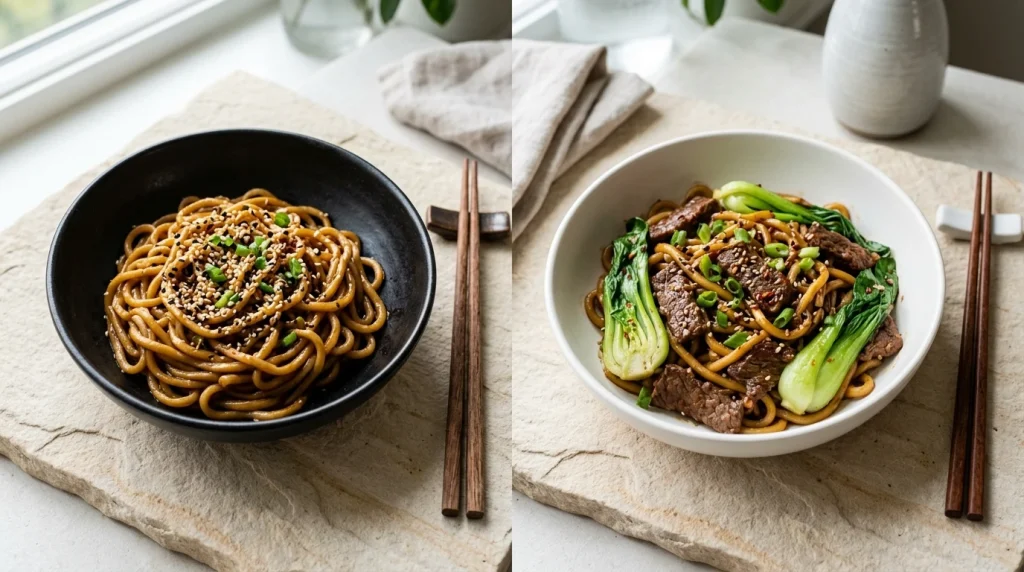
The single biggest mistake I’ve seen people make with this dish is overcooking the noodles. Mushy noodles can’t hold the sauce properly — always aim for al dente and let the final toss in the pan do the rest of the work. If you enjoy recipes where a simple coating makes all the difference, my Parmesan Crusted Chicken follows the same logic — technique over complexity, every time.
I’ve found that adding a tablespoon of hoisin sauce to the mix deepens the flavor beautifully without complicating the recipe. For protein variations, thinly sliced beef (flank steak works brilliantly), shrimp, or crispy tofu can all be cooked in the pan before the garlic — just remove and add back at the tossing stage. Add bok choy, snap peas, or shredded cabbage for a more substantial vegetable-forward version. Make the sauce up to 3 days ahead and refrigerate — it actually intensifies overnight.
Serving & Storage Tips
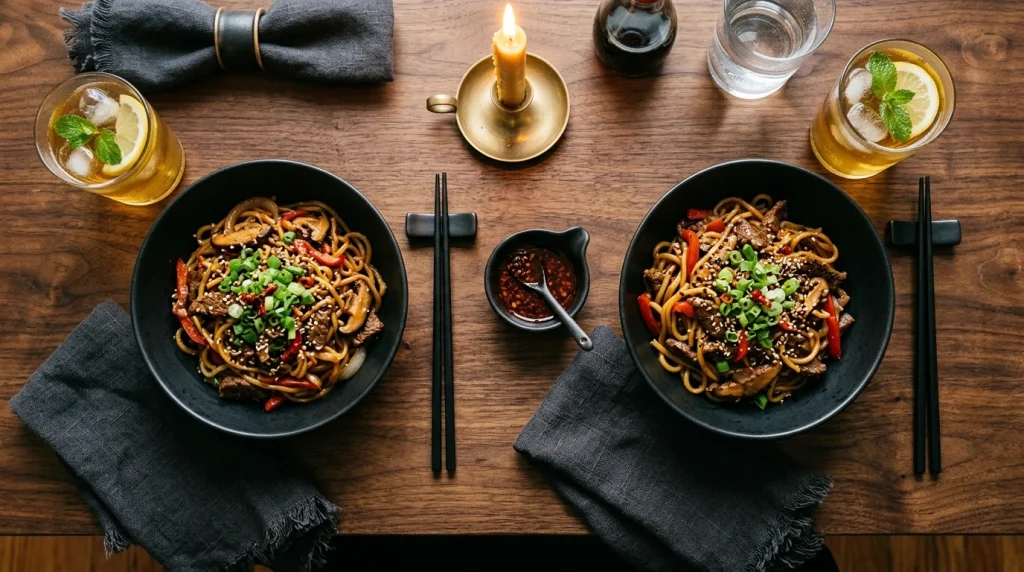
Serving: Mongolian noodles are made to be eaten hot, right out of the pan. Serve them as a standalone meal or alongside steamed jasmine rice for a heartier spread. A small dish of chili oil on the side lets everyone customize the heat level. These noodles pair wonderfully with a cold glass of jasmine iced tea or a light lager beer to balance the richness.
Storage: Leftovers keep well in an airtight container in the refrigerator for up to 3 days. The noodles will absorb more sauce as they sit — perfectly normal and still delicious. To reheat, add a splash of water (1–2 tbsp) and warm in a pan over medium heat, tossing gently, for 2–3 minutes. Avoid the microwave if possible, as it tends to make the noodles uneven and gummy.
Conclusion
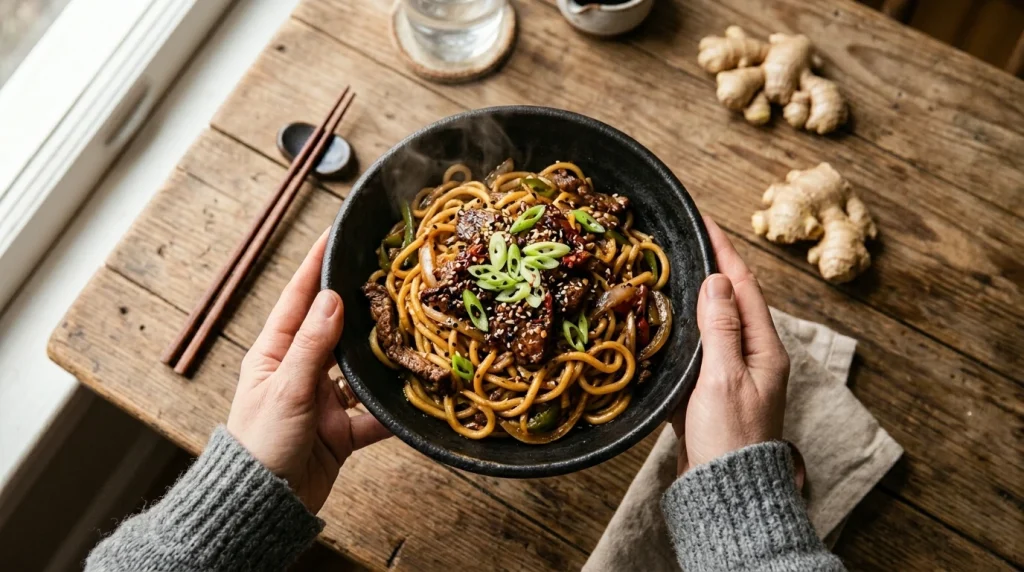
There’s something deeply satisfying about a recipe this simple producing flavor this bold. Mongolian noodles prove that you don’t need a long ingredient list or hours in the kitchen to make something truly memorable. Six pantry staples, one pan, and 45 minutes — that’s all it takes to create a noodle dish that rivals anything you’d order in. Save this recipe to your Pinterest board for your next busy weeknight, share it with a friend who swears they “can’t cook,” and watch their face when they take that first saucy, glossy, completely irresistible bite.